|
|
Frequently Asked Questions about different types of gutter products, how they work, and or last Written by: David Rich 1992 to present |
|
|
Frequently Asked Questions about different types of gutter products, how they work, and or last Written by: David Rich 1992 to present |
 |
Company Profile |
|
Photo Galleries |
|
Prices & Colors |
|
Quality Standards |
|
Warranty & Service |
 |
Gutters F. A. Q. |
|
Contact Info |

|
“For the finest in rain management.” |
.
| Note: LeafGuard ® is registered trademarks, and I have no connection to that company or franchise. I have linked to their official web sites every place I list their trademarked name below |
| Introduction |
|
Honesty: I trust you will see the advice here is simply honest and logical. Not a clever ploy to sell you on the parts I want to move for better profit, as you see in most advertising. I have been a licensed Gutter Contractor for over 27 years; since mid 1993, actively replacing gutter personally. Not just a manager of crews of workers. I was doing gutter replacement before that time as well as an employee of a General Contractor before I got my own Contractor's license, so in that time I have seen a lot of different products come and go, but more importantly is how I have seen how they work, or don't work as it were. Timing w/Other Exterior Work: If your gutters need replaced it would be best to do them with other work together, or as closely as is feasible. You could be without gutters for a few years without suffering noticeable erosion issues. At no added cost I will come in to remove and recycle the old gutters just before roofing, painting, or siding work is to commence. Then put the new ones up as my schedule permits. This way they can make sure to have everything painted properly. This is an issue because I usually find when I remove downspout that the siding behind them is still just raw wood, and had never been painted since the house was built. I have seen this even on houses built over a hundred years ago. The same for the fascia boards behind the gutters, since it is so rare to time the painting and gutters together. Roofers that are doing a full tear off will often thrash your gutters, yet they are not willing to take them off before proceeding, since they commonly expect to sell you on new gutters to make that much more money off you. Yet, if they were to dent your car they would not be selling you a new car to make an added profit. Yes, a car is easier to move out of the way, but this would apply to anything they were to damage. If they damage copper gutters they are responsible to replace them with the same level of quality, as with any other type of property damage they would cause. Materials Used: This is a much more important issue than you might think, so here is the run-down. Wood gutters have not been an option since before I was born, so that is not relevant here. Steel gutters are by far the most commonly metal used on new construction house over the last 50 years, only because steel is thought to be the cheapest sturdy material available, yet it is thinner than aluminum gutters. Rusted out steel gutters has accounted for at least 70% of my replacement work, so I have refused to install steel gutters. Steel gutters tend to only last a decade or two, depending on how clean they were kept. Since only a small percentage of Homeowners have their gutters clean regularly this is a substantial issue to consider. Especially here in the Northwest where we get a lot of rain, and subsequently have a lot of tall foliage growth around our homes to litter our roof tops with debris each year. DIY Hardware Store Parts should be avoided, because they are substandard. I could not legally install them on your house. They are not worth the effort to install, let alone the higher cost for those inferior parts. They are not to minimum code standards. Plastic gutter parts are even more expensive than what I pay for aluminum metal gutter parts. They may not rust, but the Sun will ruin them in less time than a steel gutter would normally rust out, so they are a very poor value. Especially with all the many seams that will leak every 10' or less. Also, they do not have the strength to support a ladder. Even if plastic gutter parts were less expensive they are still worse than steel gutters. Aluminum gutters have remain faithfully in service for over 60 years now, when installed correctly. Think of how long they have been making aluminum ladders without a protective paint coating. It is 1.5X thicker than a steel gutter to compensate for strength. Since aluminum does not rust even if all the paint were to flake off the inside surface of the aluminum troth they will still hold water and foul debris without bleeding through and causing unsightly rust stains. I have aluminum ladders now over 30 years old that I still use on a daily basis.
|
| Ladder Safety Tips? |
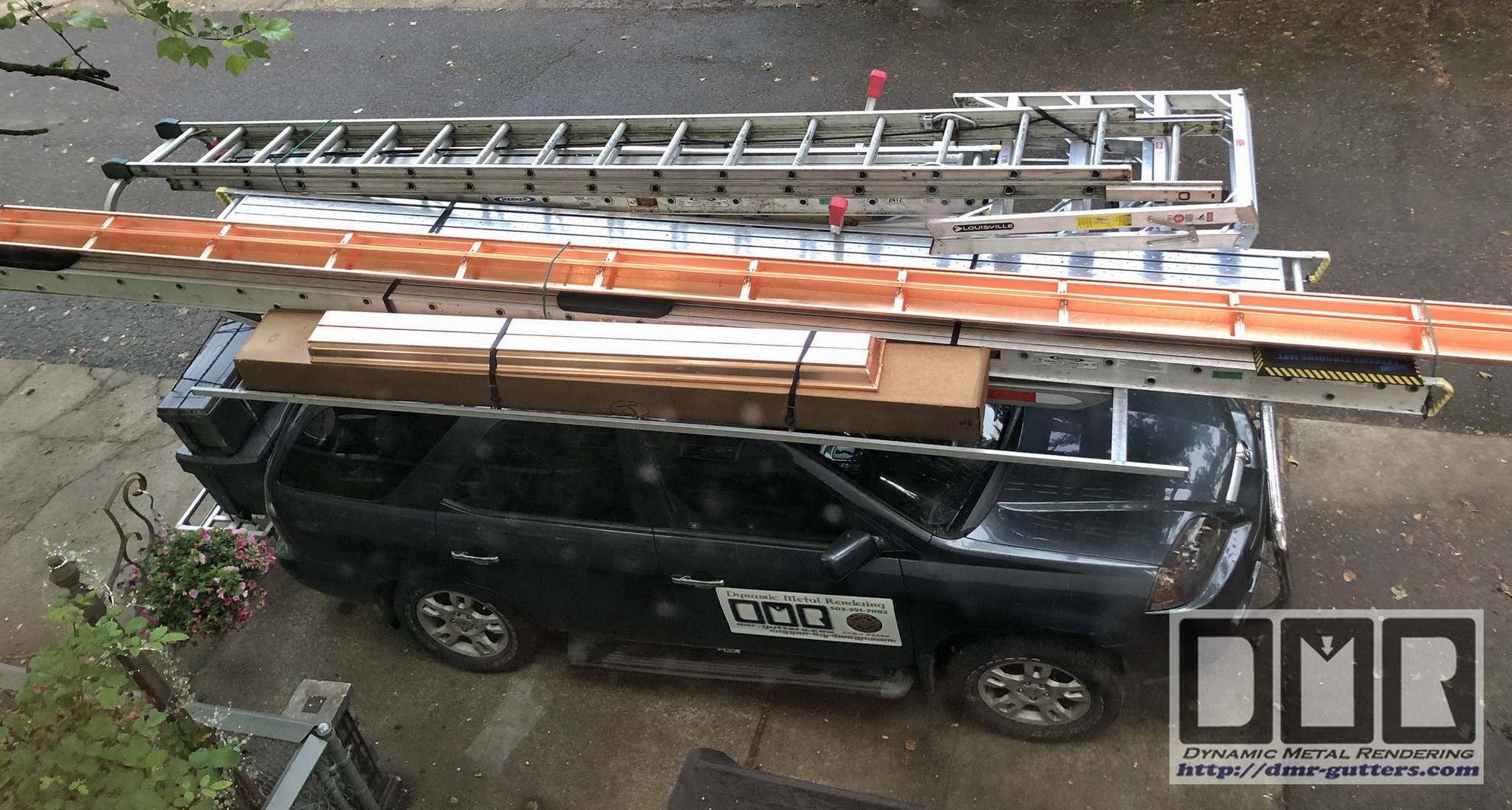
The most important piece of advice I
would highly recommend for all Homeowners is to get a 'U' shaped padded ladder stabilizer attachment to put on the top of your ladder, so you can access your gutters without denting or even scratching up your gutters.
They also will help you feel safer with the ladder not sliding on the gutter
sideways, as the feet of your ladder sink into the soft dirt. Even if you are not going to be cleaning out
the gutters yourself you should get one to have on hand, so you can insist workers use it when accessing your roof. It is not expensive and attached easily with wing nuts. Tell them to return it when they're done. If they forget and drive off with your accessory you
may have lost that $30, but that is less than the amount of damage they would have caused had they not used it,
so don't sweat the small stuff.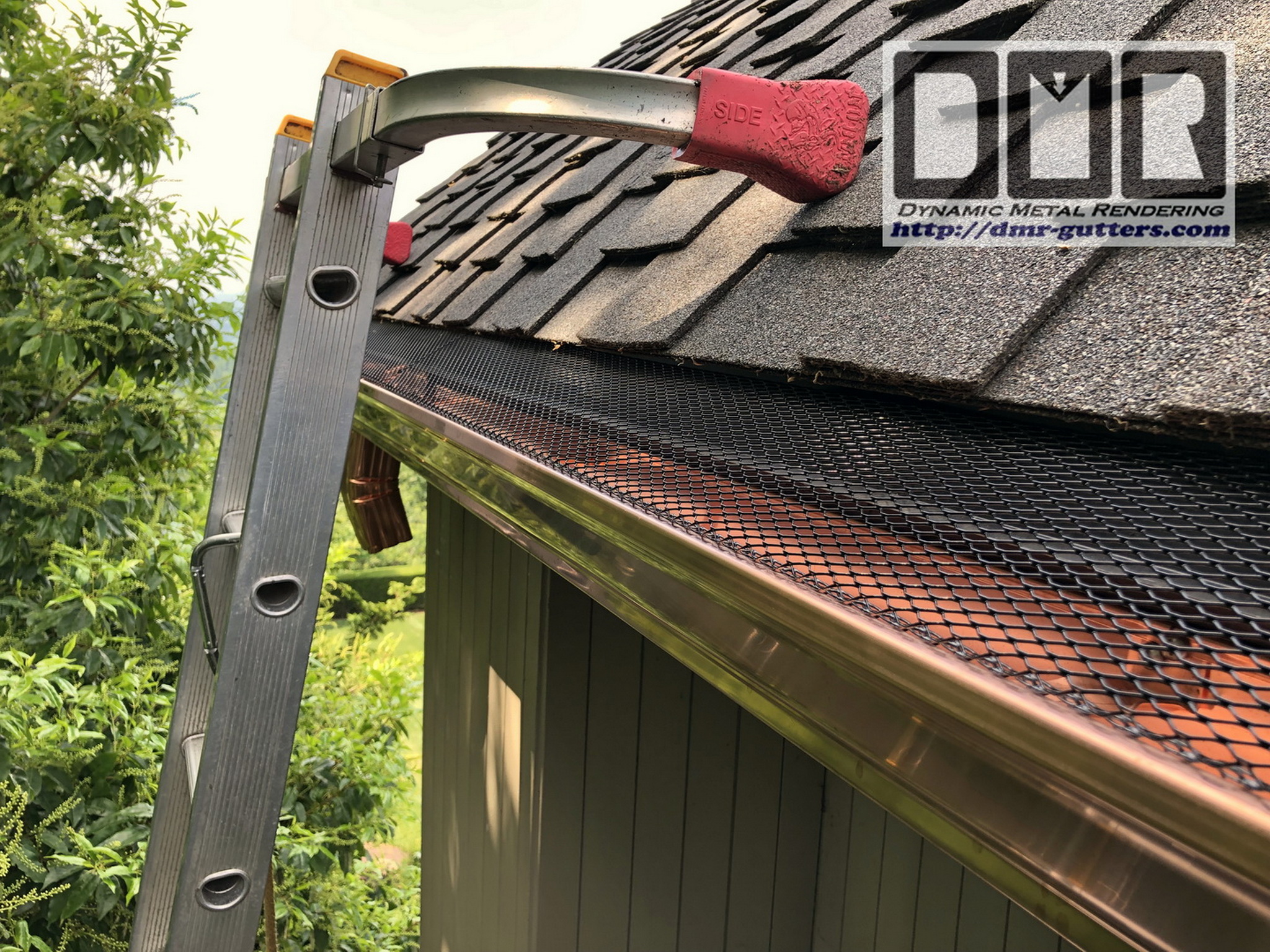 Also, if you have areas around your house that have irregular surfaces where you need to place your ladder feet they make ladder levelers to attach to the bottom of your ladder side rails, so you do not have to use loose blocks of wood that can slip and cause a serious injury. A good set of ladder levelers may not be cheap or easy to attach, but they are still a very good investment if you compare that cost to a single visit to a hospital Emergency Room. Especially if you have a high reach of a 2 story gutter you should not scrimp on a cheaper light weight extension ladder. Light duty Class 2 and 3 ladders with just a 200# to 250# rating is what you'll see at most hardware stores, but a Class 1A and above will have a higher weight rating of 300# to 375# weight capacity. Even if you have not packed on a few pounds this is a more sturdy ladder and not as wobbly as those light duty ladders, which can be quite intimidating as you climb just half way up the ladder. I know you may not use it a lot like I do, but this is a small investment that is by far worth the added cost. Order it on-line if you cannot find what you need at the local shops. I use a 4', 6', 12', 16', 24, 32', and a 36' Class 1A and 1AA aluminum and fiberglass ladders. They have thicker side rails, which are heavier to move around, but safety is much more important. I rarely need to extend it all the way up, which it is good to have more of the ladder overlapping in the middle for even more stability, so buy a ladder that has a longer reach than you will need. Again, this will make the ladder a good deal heavier, but will feel a lot more stabil and safer. It seems they should have started this numbering system differently, since there are now 2 classes above the Class 1 ladder rating. Fiberglass ladders are required for doing electrical work, because they will not be grounded, but they are more expensive and heavier than aluminum ladders of the same Class. They also will not last as long if exposed to Sunlight while not in use. In my work as a Gutter Contractor since 1993 I have not found electrical hazards being a problem. Just don't grab the power line while on your ladder and you should be fine. Leave that high voltage work to the professionals. |
| Do I Have to Have Gutters? |
| Here in the Northwest
it is a matter of Building Code to have gutters with a storm drain system in
place before passing inspection. Even for a garage. The
reason for a storm drain system is to avoid erosion under your
foundation, which can cause very
expensive damage. Any other benefit is superfluous. Having no gutters is better than channeling all
that water in any one spot near the foundation, so functional storm drain pipes are
crutial. Having no gutters are even better than failing gutters.
Your house needs to have a functioning storm
drain pipe system to channel that water well away from your foundation by as
much as a dozen feet, or gutters are pointless and would cause more
problemns than they would help. Storm drain pipes need to have a 3" to 4"
inside diameter made with schedule 40 ABS plastic pipe parts that glue together for a water tight
seal. These pipes need to be smooth wall and set down under the ground 18"
deep for freezing, and then grade downward at least 1/4" drop per foot out
to where ever you are draining the water to. That is a 2.5" drop for every
10' span. More grade is of course better. Avoid the accordion type of pipe, since they are not to code, are very fragile, do not seal, tend to trap a lot of debris inside the pipe, and clog quickly. They should deliver this rain water into a larger tank called a drywell, or out to the street. Or perhaps off to the side where this extra river of water will not cause problems for your neighbors. It is not lawful to drain this water within 5' of a property line, as they can sue you for any property damage from your rain water run-off. A drywell needs to be more than just a hole filled with rocks, which seem to be what most Contractors do. Unless you live in a fairly dry area this needs a large tank the size of a hot tub to take all the water you might get in the heaviest rain storm we're likely to encounter. It then needs to be able to let that water gradually soak into the ground to drain that tank before the next rain hits. If you are in a dry area you probably do not need any gutters on your house at all. Check with your local building codes. There are areas here in Eastern Oregon where the bedrock layer is only 1' deep. Where hear in the Western side it can be some 20 to 30 feet deep. Our houses are sitting on a soft bed of dirt and are highly prone to substansial errosion and settling, which can be very costly to fix. More than a dozen sets of new gutters. I know the cost of having your gutters cleaned out is expensive and a hassle. As we all know, there is nothing that is more frustrating where it comes to house mainenance on a regular reoccuring basis than failing gutters, but keep this in mind how each time they overflow it is hundreds of dollars in damages, which adds up to thousands of $ each year, and tens of thousands each decade. A foundation resoration can cost over $50k, and you cannot live in the house for half a year while it is being fixed. This is where you will be debating wether it is best to just tear the house down and start over in stead. The damage or loss in property value is more than the cost of having your gutters cleaned 4 times a year. This is why I focus on low maintenance gutters I install. |
| What Sizes Are Available? |
| I only have a single K-5 gutter machine.
I do not have a machine that can make a larger K-6 gutter, let alone a K-7 gutter. There is a K-7 gutter machine, but I am not aware of any in the Northwest. I do not even know what width gutter coil that size gutter would require. The local suppliers stock aluminum gutter coil in all the 30 colors in 12" width for the K-5, and 15"
width for fascia gutters and a K-6 machine.
As I stated above in the Intro: it makes less difference in the function of
a gutter system how larger the gutter is, and more difference of how large the
gutter floor and outlet is. Imagine if they made a gutter as large as a bath tub, yet the outlet drain was still that same small hole, which as you know frequently gets backed up from just hair collecting inside the drain. With all the tree fallout we suffer each year a much larger gutter would plug up just as quickly unless the outlet size is dramatically increased. Most gutter outlets are so small you can only get a few fingers in the hole, where I can pass my clenched fist down into my larger 3X4 'No-clog' Outlets. Note: I hate to use that term: 'No-Clog', since it is not truly realistic, but that is the terminology my competitors are using. |
| What Metal Thicknesses Are Available? |
| The local suppliers
stock aluminum gutter coil in all the 30 different colors in a 0.027"
thickness, which is about 1.5X thicker than the steel gutter coils they sell. They
will not carry any aluminum gutter coil in a thicker 0.032" coil, which is
more common back East, because there is so little demand for a better gutter
coil here in the Northwest, but one Supplier called Lansing Building Products
has the 0.032" aluminum in stock for a few of the more common colors. They
are out in Gresham, so it is a very long drive for me in Sherwood, but I
will make the trek for my clients. I can get these from my suppliers in whole coils
that are up to 400# in that one color, which is around 800 linear feet
long. As for copper gutters the standard in this industry has been 16oz copper for as long as I can remember, which is thinner than the 0.027" thickness aluminum used. The strength is comparable to the aluminum, given how copper is a stiffer metal. Although, that does not make sense, given the fact that any Client asking for copper gutters is clearly looking for better than standard. I stopped offering 16oz copper for gutters over a decade back. Even for the roof flashing I make. I only use a thicker 20oz copper, which is the same thickness as the aluminum gutter coil, so it is noticeably stronger. I had to find a supplier back East and order larger quantities of over 1,000# at a time in order to get them to ship it to me, since the local suppliers refuse to stock any 20oz copper, because of such low demand by the other Gutter Contractors. That makes DMR Gutters the exclusive dealer for this thicker copper sheet metal. I also have not used the softer standard brass hidden hangers. I order solid copper hidden hangers from a manyfacturer back East, which are also wider with 2 screw holes in the back. They are made with a thicker 48oz copper. Another detail you will not get from any other Gutter Contractor who is willing to work with copper. |
| A Little Gutter History |
|
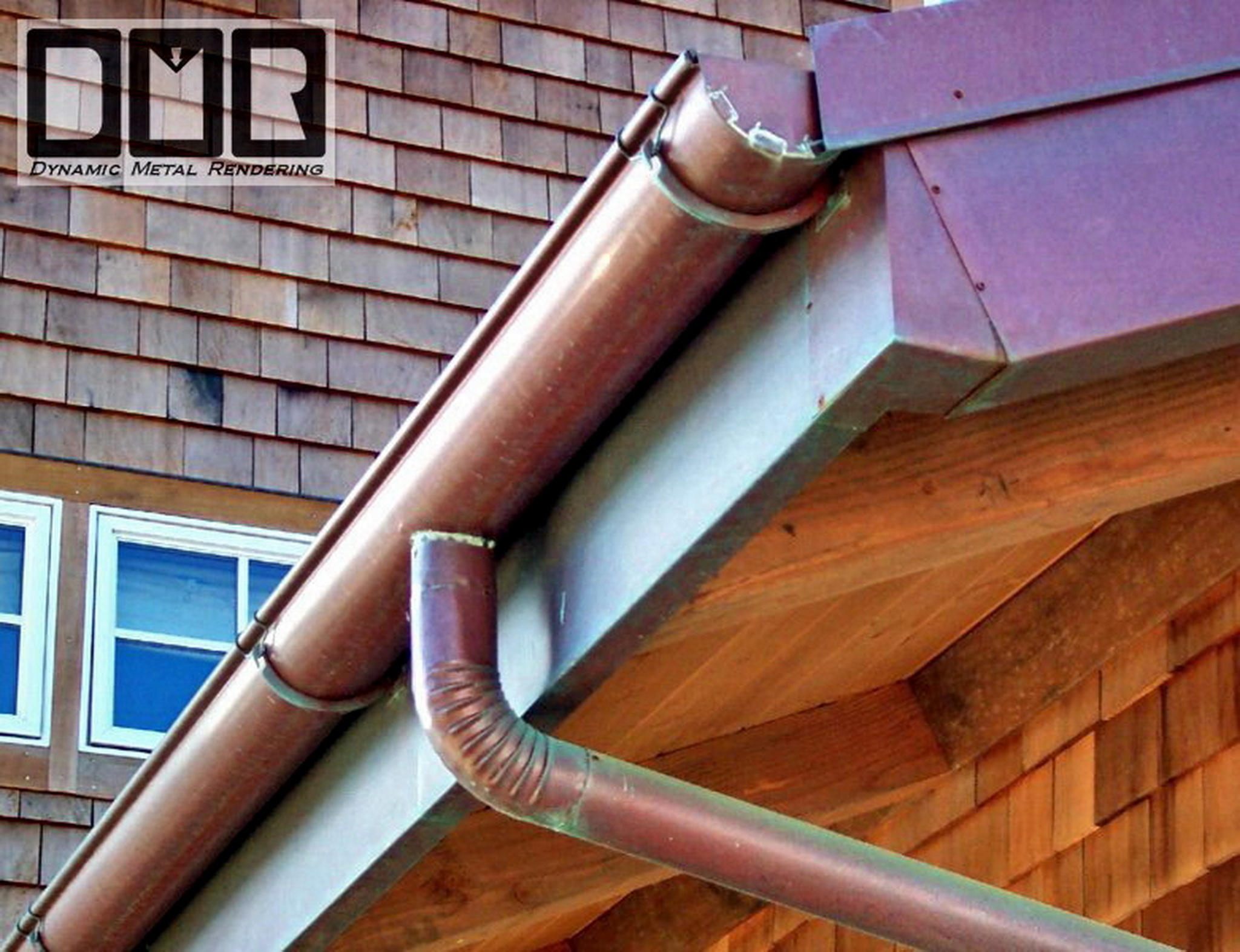
What changed the trend for gutters as a standard on homes? It has not been all that long since the development of the continuous gutter machine and gutters being reasonable priced. Many of the older homes built before the 1940’s here in the Portland Metro area were originally built without the benefit of gutters, since there were no building codes requiring them yet. One reason is they did not have any good cost efficient solutions for rain management like we do now with the development of continuous gutter machine and aluminum sheet metal that won't rust. The only reliable early gutter concepts were hollowed out cedar 4x4s or copper sheet metal formed over a wood substructure. They were very expensive, so only the fancier houses had them. Sealing the seams, ends, corners, and outlets were a trial, so very few houses had gutters. Also, Concrete foundations were still a relatively new concept, so the damage from excessive ground erosion was pretty much unknown by most people. It is something that does not normally occur over the course of a few years, but over a few decades. Although when this damage has occurred it is such a costly and invasive repair that the house is rendered nearly worthless at that point. Now when a Home Inspector sees evidence of a cracked and unlevel foundation it drops the value by $100k, since the repair is so costly and time consuming, as seen below in the next section. Sheet metal gutters had to be manually bent into shape on a 10' wide bender and all the seams had to be sealed, which often did not last long with the expansion and contraction that was different than the wood structure. When these seams would fail it would cause moisture damage to the substructure. For the most part they were not strong enough to be mounted outside along the edge of the roof lines, so they had to build out wood structures to cradle them and hide their ugliness. Much like some of the first cars, where even headlights were an option; gutters were not a standard, and still aren't in some dryer areas like Eastern Oregon. The cost of gutters had to be brought way down for them to be a viable solution for rain management on all houses in this area where we get a lot of rain fall each year and erosion is a real issue. Sadly over the last 4 decades here in NW Oregon and SW Washington area Builders reverted to cheaper steel for gutters (which rust within a decade) on over 90% of new construction to keep costs down. They also never graduated to the better hidden hanger bracket in all this time, as used more back East. The main problem with the nails they use, as most homeowners here know, they tend to come loose and need to be pounded back in each year to keep the gutters from falling off the house. Once they come loose that shows they no longer have enough grip in the wood to hold the gutter, so knocking them back in is rather futile. The unseen issue is the ferrule over those nails. They have a seam that is suppose to be positioned downward to shed the rain water. Yet from what I've seen over the last 2 decades those installers do not care, so as odds would have it 50% of these seams are upright and those ferrules fill with rain water and soak the wood around these large nails, which of course causes them to loose their grip as a result of that dry-rot. The expansion and contraction of temperature changes also help to work those nails loose. Besides the extra cost of aluminum Builders did not like aluminum gutters, since they expand and contract more than steel gutters when installed sloppy like this, so they would tell the Homeowners how they don't want flimsy aluminum gutters when asked about this detail, falsely suggesting the comparison is like a pop can and a can of beans. That is neglecting to inform them that aluminum gutters are about twice as thick as steel gutter for this reason. These Builders still did not change their MO even after the Mount St. Hellens eruption had caused thousands of houses to loose their gutters from the heavy ash that washed down off the roof. They still refused to switch over to hidden hangers and screws. Gutter Contractors suddenly had over 5 times as much gutter replacement than ever before, so they were scrambling to get as much work done as fast as possible. Mount St. Hellens may not erupt again in our life time, but over he last few years we have had unusually severe winters in 2004 and 2008, which again had caused a lot of gutter damage, yet they most Gutter Contractors still refuse to switch over to what DMR Gutters has been using since 1992. It would be nice to say we are not due for these sort of extreme winters for another 50 years, but when you factor in Global Warming that is no longer the case. Responsible Contractors need to prepare for realistic worse case scenarios. It did happen here, so when this sort of evidence presents it's self we should adjust how we do things. Gutters are still a rare thing to see on houses in much of the country, but here in the Northwest and other places near the coast gutters are required by building code. Building code still may not require gutters in housing construction in areas that do not get as much heavy rainfall as we do here. As close as Eastern Oregon, where they only get a few inches of rain a year that has been the case, but these codes have been changing there as well. Although, if you look around at the houses in Bend, Oregon you'll still see where most houses do not have gutters. Some houses may even have a short 10 foot gutter just over their doorway, which the Homeowner bought at a hardware store. They often would not bother to mount a downspout, or put on any end-caps. The water simply runs out on either side to splatters to the ground. Back in the 70s and 80s you would see aluminum used on most ads for continuous gutter replacement, but it was used less and less as time went on. Homeowners just expected they would be rust free gutters, but were later disappointed to see they had been swindled and see rust forming within the first decade. Long after their warranty had expired. When I came into this business in the early 90s there was a huge rash of rusted out steel gutters that were replaced just after the Mount St. Hellens eruption in 1981, so I had a great need out there to help launch my new Gutter Contractor business, but I could easily see the evidence of what had failed and was not about to do the same thing. Although, sadly I remain rare with this mindset of ethical responsibility. |
| Why are Gutters Needed ? |
|
Functional gutters are important!
Not having rain water drip off the roof and onto your head as you leave the house is a nice advantage of having functional gutters on your house, but it is not the reason for why building code requires gutters in this area on all houses and garages. It is not even because of flooding basements. As stated above, it is the result of seeing thousands of houses with cracked and damaged foundations, due to ground erosion caused from the many tons of pressure from the weight of the house and roof pressing down on the foundation. Even sinking just a few inches is devastating to a houses value and livability, making it dangerous to live in from electrical fires or broken pipes from this sort of settling. The evidence has been quite clear and all too common.
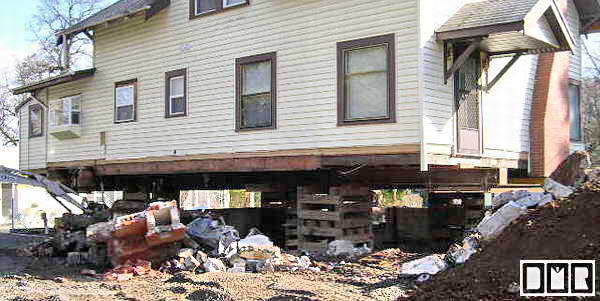
Keep in mind that without a storm drain system to carefully carry the rain water away from the foundation out into a dry well or over to the city streets; gutters are not only pointless, but will do more harm than good. Picture in your mind; having no gutters on your house and letting the rain simply dribble evenly across the roof edge. This is better than dumping huge amounts of collected water at the low spot of your gutters. All in one spot on the ground near the foundation each time they clog up with debris. This house in Milwaukie, Oregon required major foundation replacement. They spent a great deal of effort to publish a couple web pages with over 100 photos on each page detailing the recreation of their basement. Click on the photo above to see what they had to endure to fix their problems and how long it took.
If your storm-drain system is not functioning correctly, you should have it fixed by some Roto-Rooter type company. It is very important! I've seen many older houses around the area that have gutters, yet there was never any storm-drain system installed? the downspouts just bleed gallons of rain water out onto the ground just inches away from the foundation. This is a tragedy just waiting to happen, if it is not already too late. Your better off with no gutters than a failing storm-drain or failing gutters. Again, the primary reason for gutters to manage the rain water from the roof of a house is to prevent ground erosion that causes foundation problems. If you have a basement, that is even more of an issue, and you may have suffered some flooding in your basement. It was not until the local Government (not so long ago) established building codes and it's enforcement to uphold these codes, that we had it as a standard in housing construction in this area to have gutters on all structures. Due to our heavy rains in this area over the years, many foundations had fallen to ruin. As well as a weaker foundation with no steel re-bar reinforcement. Crumbling apart from dirty concrete; large round river bed sandstone mixed with muddy river water. |
| Hidden Box-Gutters |
| What
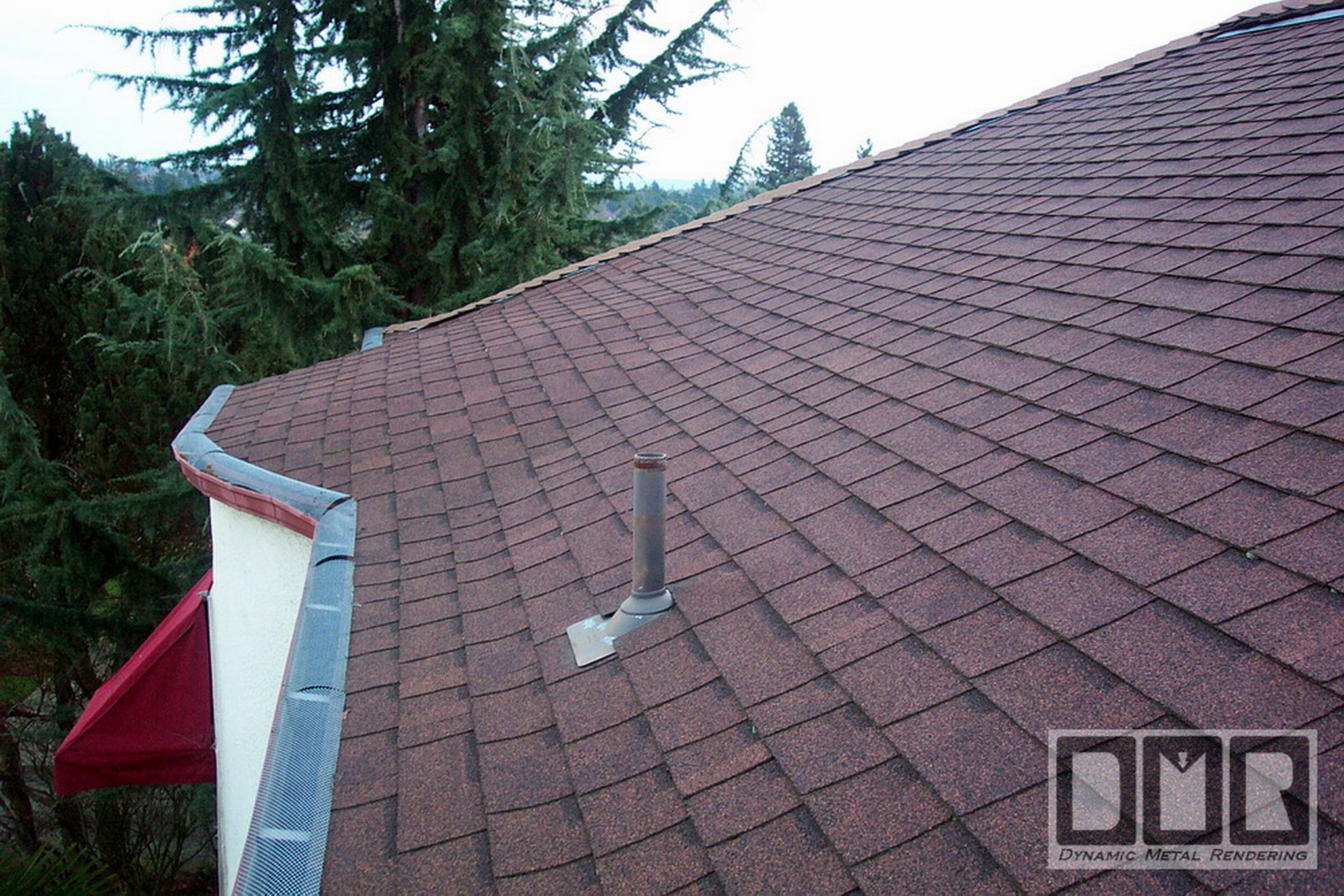
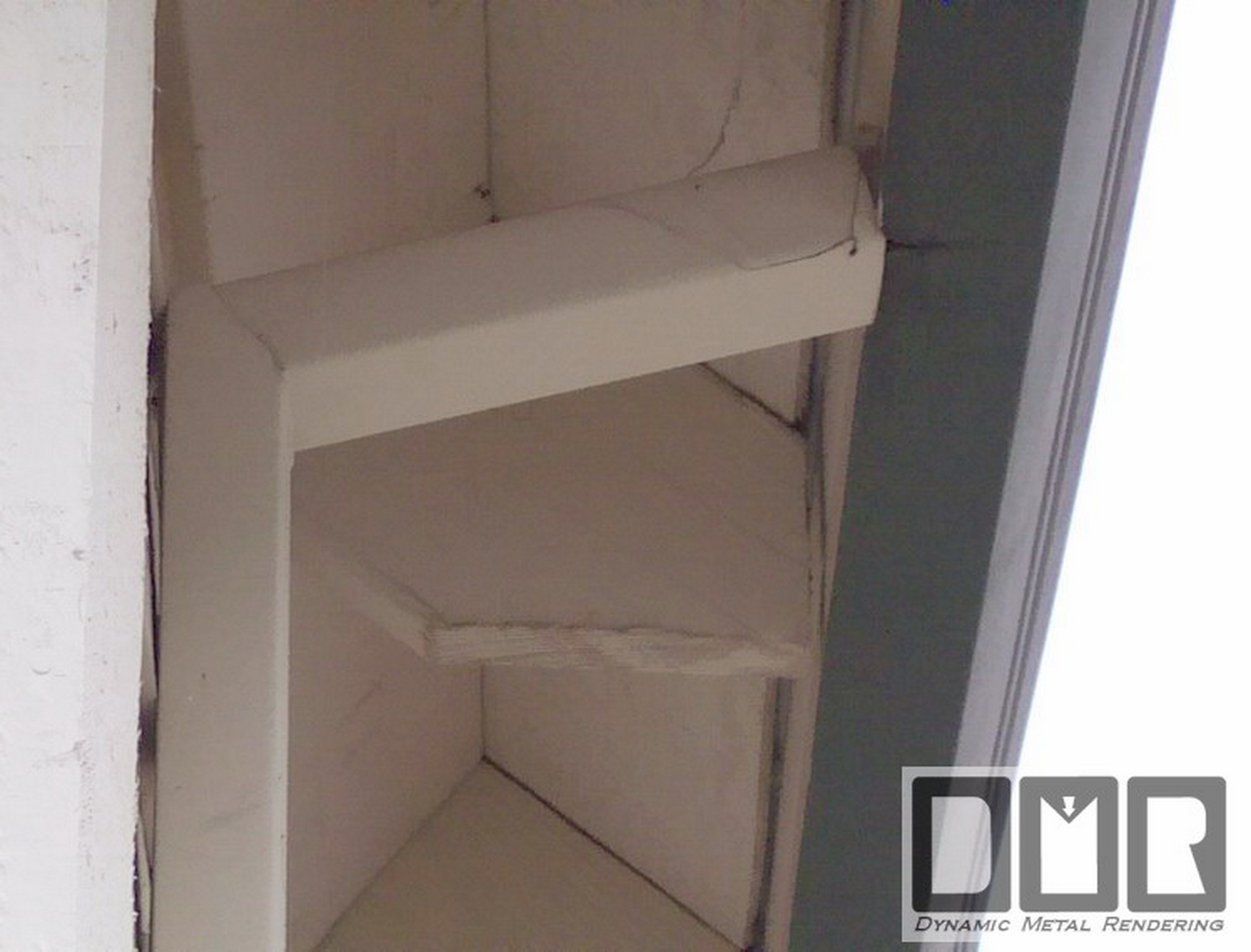
were some of the early gutter concepts? Back in the early 1900s some of the larger houses in the area were built with an elaborate eave with a soffit, fascia, and wood molding on the outer edge. They had to custom form a steel or copper gutter sheet metal to fit in this wood channel. Some problems with this was having separations every 10 feet that had to be soldered together. Hopefully without burning the house down from the open flame torch it takes to do this. They had to use solder, since they did not have the good silicone composite caulks like we have today. They would have to solder them together after they were up on the house using an open flame torch, which was dangerous right there against the wood of the structure. They probably burned down a few houses doing this, like the huge fire they had in the West Hills a few years back from plumbers soldering water pipes together. The expansion and contraction due to temperature changes are different than the wood structure, so these seams would be ripped apart and leak even before the steel liners rusted through. This expansion and contraction would also cause them to buckle and pull loose. Even if the seams were not pulled open, the sheet metal would fatigue over time and develop cracks if it was a long run of gutter. When this happened these leaks would cause a great deal of dry-rot of the wood substructure under it, causing a great deal of damage requiring expensive repair and repainting, so it is not done much any more these days and they went to the external gutter we are familiar with these days. This way any clogged and over flowing gutters or leaks would not cause such expensive damage to the wood structure. On this house I had removed 3 layers of custom formed steel gutters over their wall. Each layer was placed over the rusty gutter below it, and that top layer had rusted through as well. This house was only about 50 years old at the time. Since that old gutter system would leaking inside the walls and causing a great deal of damage and mildew inside the house I strongly recommended they have me abandon the built-in gutter all together. I made a custom wider aluminum drip-edge flashing to cover the old gutter and mounted an aluminum gutter on the outside of the stucco walls.
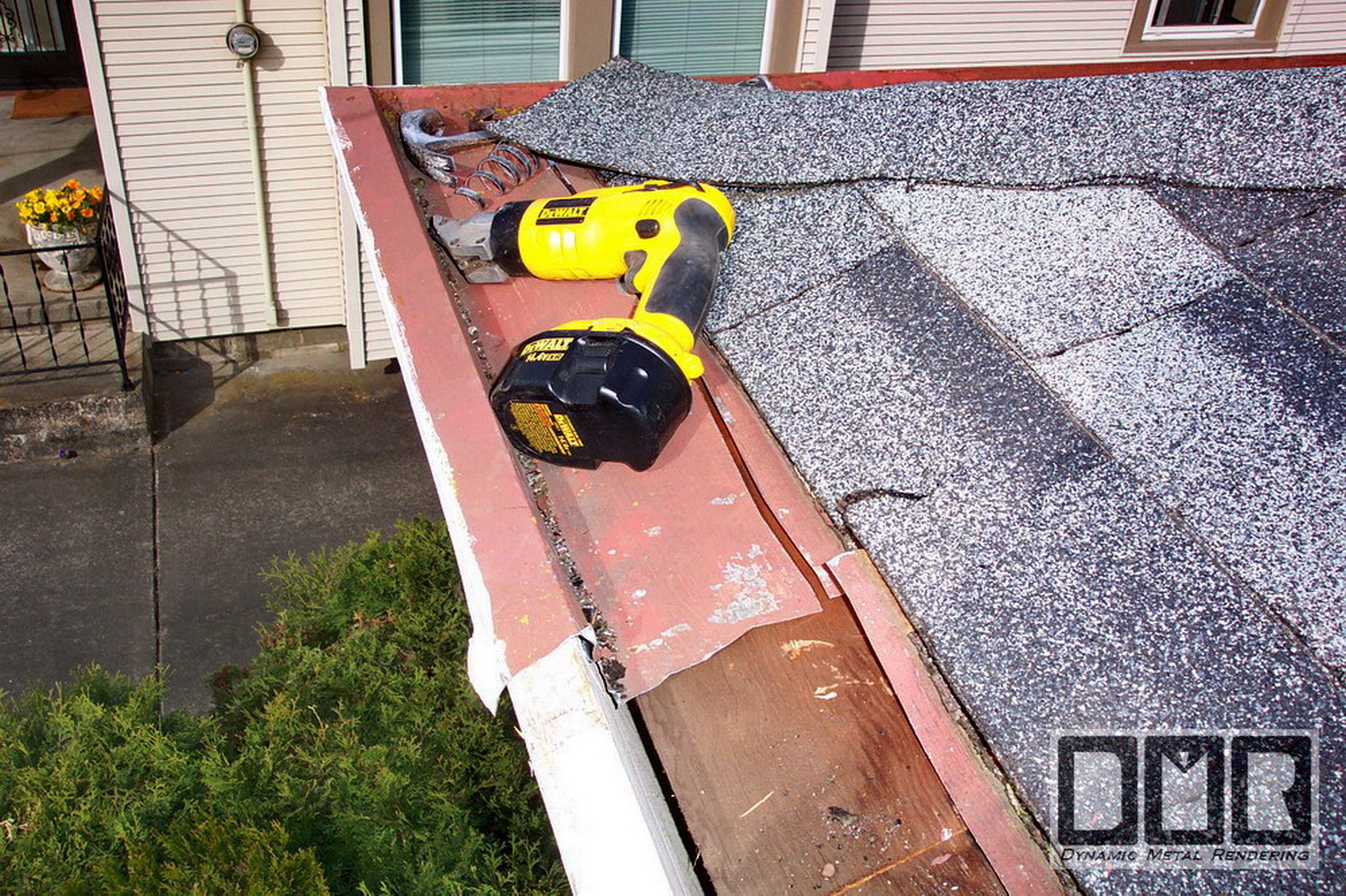
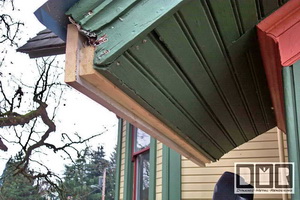
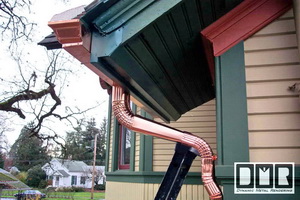
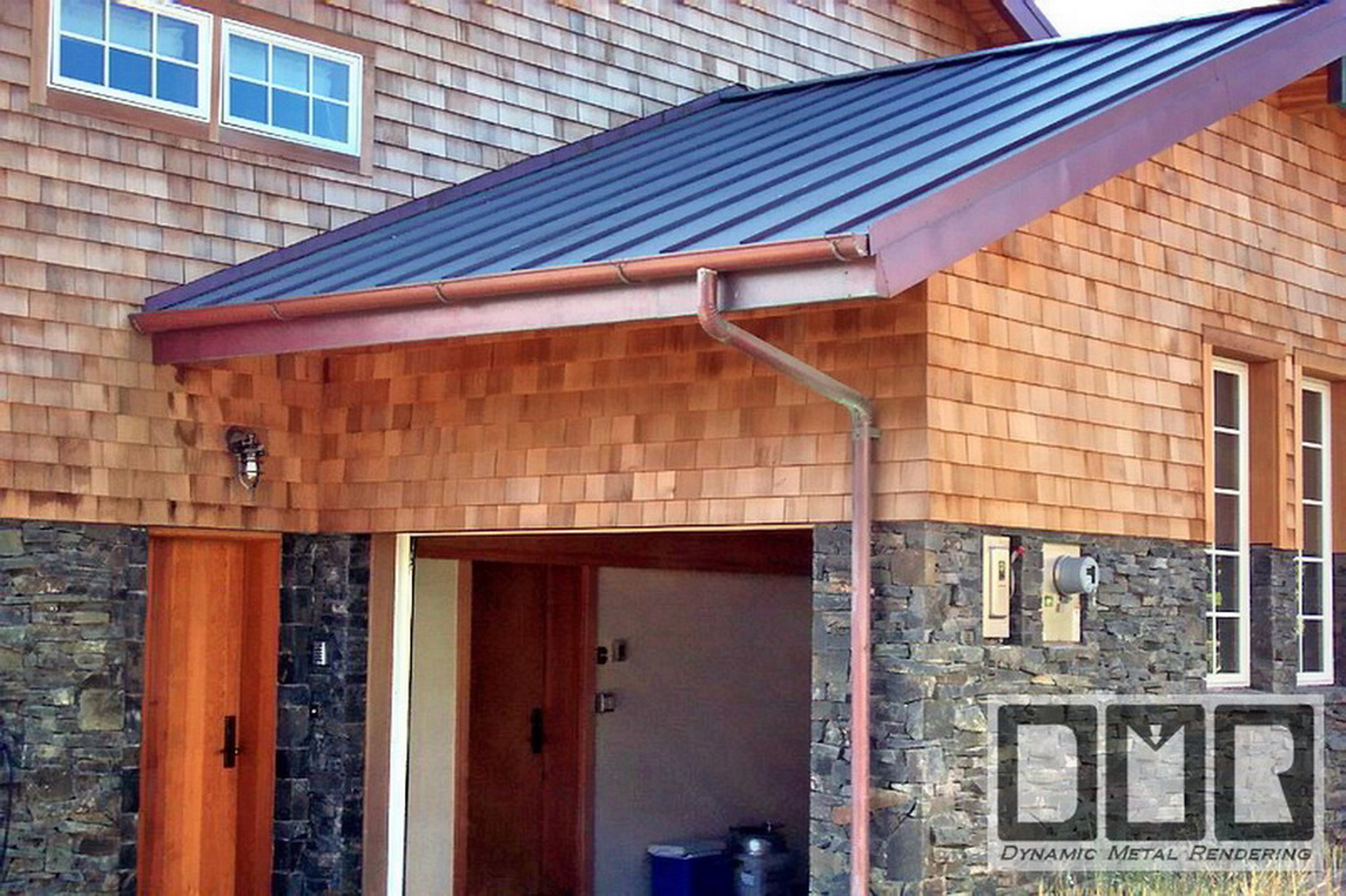
We were called back a couple years later to replace the roofing. We did a 3 layer tear-off, new plywood that properly covered the old gutter, and a new 40 year roofing. These photos were taken about 10 years later when I was called in to check the condition of the roof and gutters. In the 50s and 60s they built a lot of cheap flat roof homes with a tall fascia board that was higher than the edge of the roof. Then they simply nailed on a roll of flashing sheet metal to the top edge of that fascia board, and pressed it down into the end of the roof, making a shallow gutter, and just slopping hot tar over the roof. This gutter concept was also a horrible idea, and many of these houses needed to have the fascia board cut down to be flush with the roof, and an external gutter mounted. Here is an example of another house I worked on back in 1994 to fix the back side, and again in 04 to complete the job. Click on the photos below to see more detail or this link to read more about this project: http://dmr-gutters.com/ag/Gamenara.htm
|
| Old Steel Sectional Gutters |
| How
were the early external gutters made?
After it became a matter of building code in this area to have gutters on houses to save them from ground erosion. In order to make these cost effective they were using steel sheet metal for gutters instead of copper, since aluminum was still not a reality yet. But these steel gutters were not lasting very long. Later they developed a galvanizing for steel to make it last longer. They were able to make them last 10 to 25 years, depending how clean they were kept. Originally they did not have complex sheet metal roll forming machines to generate continuous gutters like we have today. Sheet metal craftsmen would have to carefully bend 10 foot strips of metal into this wood molding shape for the outer face of the gutters, to replace the old wood moldings many of these older houses had. Some cheaper gutters would only have a plain flat face to them, being the first fascia gutters, just not as tall. Again, they would have to use solder, since they did not have the good caulks like we do today. Still, the inherent danger of the open flame was a problem, but there was no other solution. They had to make gutters that could be mounted outside the wood structure so when it leaked or over flowed it was much less destructive. They first made a small gutter with a very narrow bottom, to mimic the old wood roof edge molding. It was later abandoned due to it’s lack of function, since it filled with debris too quickly, and was too hard to get your hand in it to clean them out. This larger gutter worked OK, but was still expensive since it was so labor intensive, and did not last long. |
| The OG Wood Molding Shaped Gutters |
 Why
were the K-5 gutters developed? Why
were the K-5 gutters developed?
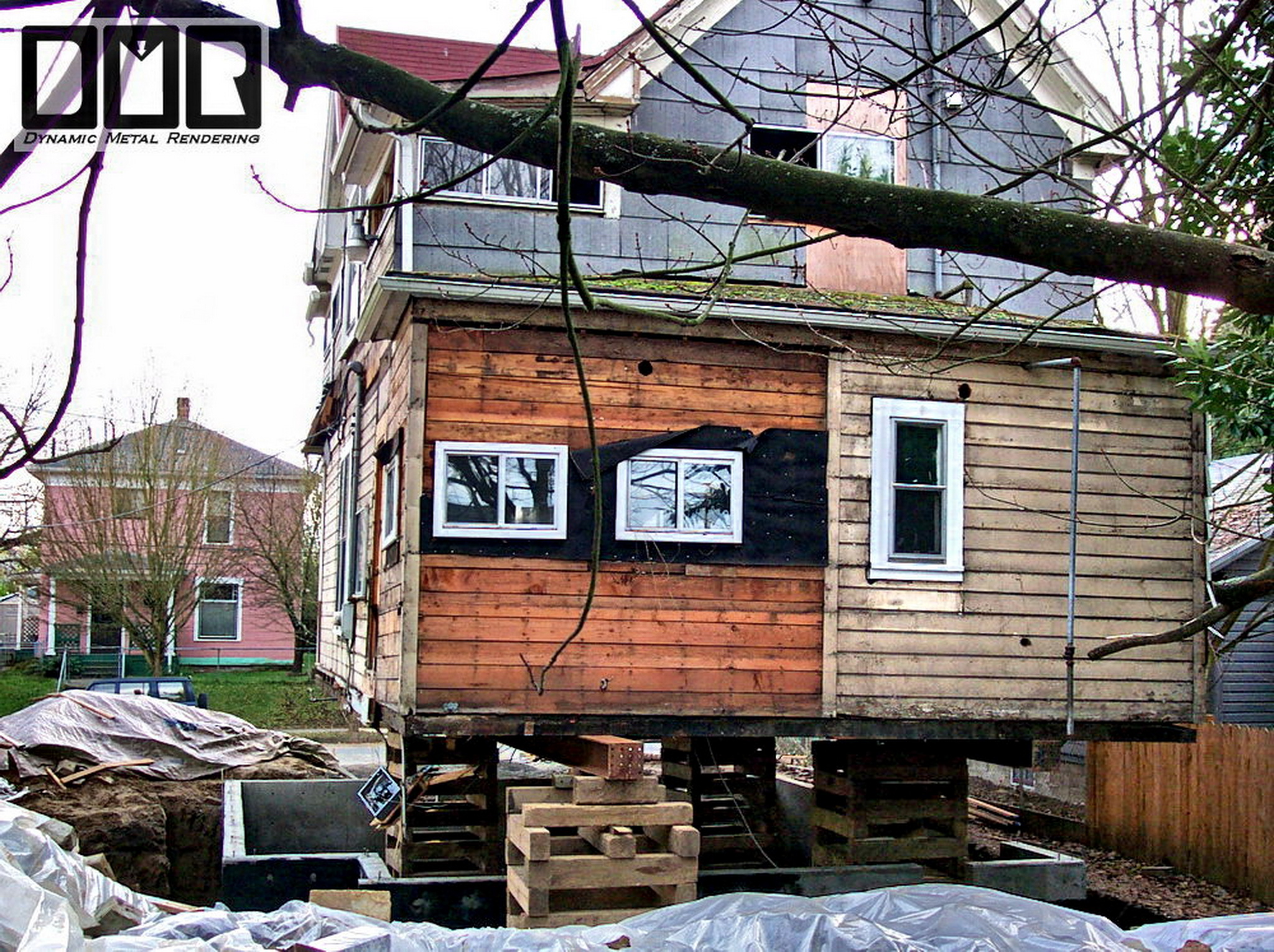
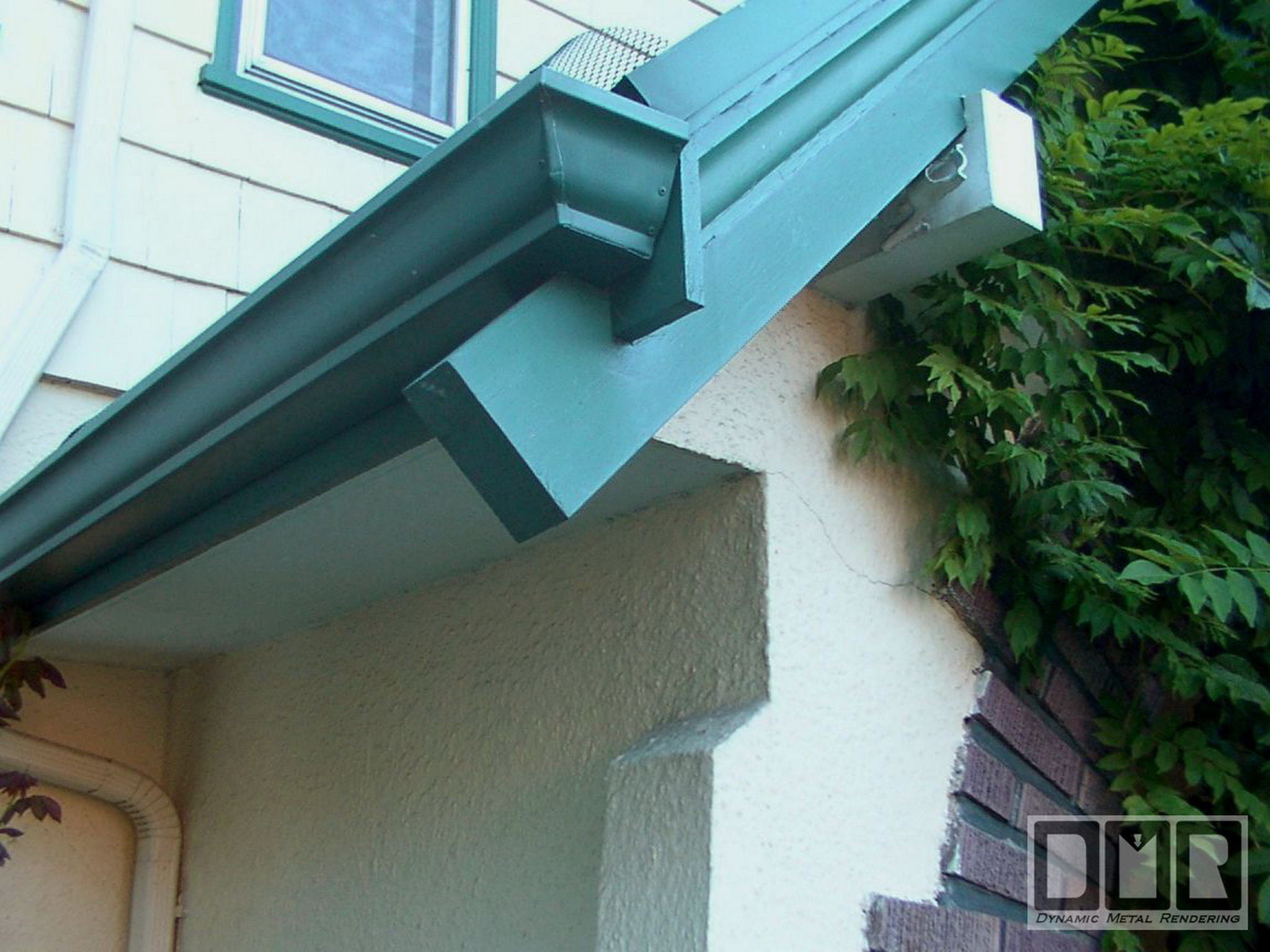
Back when homes were built with some style, even if they had no gutters. They had fascia boards, soffits, and some wood molding along the roof edges. This molding is the only reason for the shape of the K-5 style gutter. They used long nails with thin rolled sheet metal tubes called ferrules, to support the gutter and resist ladder pressure. To mount these gutters right, the installer is to remove the old and often rotten wood molding. The gutter then replaces that wood molding. This in keeping with the style of the house, as though it was meant to be like that from the beginning. This house to the right had some quarter round gutters on it that were rusty. The client thought to keep it historical he needed to find a contractor who could make the same sort of gutter. That gutter profile was no longer available, and we explained to him that looking at the details of his house, it shows that a wood molding gutter would be much more proper anyway, since he had that same shaped wood molding there on the rake-edge of the roof (as seen in the photo). It is sad to say, but due to the cost and hard work it takes to do it the right way, it is very rare to see it done right. They developed a short cut by installing gutters with straps that wrapped around the gutter, and were then nailed on top of the roofing, which goes against all concepts of proper roofing; to hide all the fasteners from the weather. We have more details about this problem in the next section here, and a few web pages detailing what we do to properly mount gutters on houses that were originally designed not to have gutters.
|
| Old Half-Round Style Gutters |
| What
about the classic look of half-round gutters?
This is one of the most common misnomers in gutter work still today. I work to educate our Clients about it when this subject comes up. The problems related to a half round gutter style are numerous, which is why it had become obsolete over half a century ago. Think about this for a minute. This is why they are so hard to acquire now days, since there are not many of those old machines still in opperation. The thought that this is a more classic look is actually incorrect. Older classic houses were originally built without gutters or had built-in gutters that were concealed from the ground view with wood molding work outside them. This simple curved bottom shape was just one of the very first continuous gutter machines built. Later they had developed the K-5, or OG wood trim shaped gutter machine to form a continuous gutter that looks proper on most houses built before the 40s. The half round gutter parts are very expensive, yet not worth half of a K-5 style gutter, which is around a 400% price discrepancy of cost versus value. Not a wise choice anyway you slice it, but please read on so I can explain why I say they are such a terrible choice for use as rain management.
Here is a list of the problems associated with this style gutter:
As I wrote above the main problem with the built-in gutter design was that when it clogged and over flowed, or later when the sheet metal rusted through and the seams every 10' began to leaked it caused serious paint damage and dry-rot, so they realized an externally mounted gutter system was necessary. Classic houses without the benefit of gutters would commonly have an OG type of wood molding at the roof's edge to finish it off, which is just like the shape of the K-5 gutter I install. Often this wood molding is worn and rotten from all the years of rain dripping off it. I've gone out of my way to build out the roof edge to form a structure to mount our flat back gutter to attach the hidden hangers to with wood screws (see our Fascia Fabrication web page for examples). The older houses like this did not have the half round gutter originally. They were added much later, so thinking this is bringing it back to it's original look is simply not true. You need to think of what the original architect would have designed if he had access to what we have today. The half round gutter machine was just a very simplistic roll forming machine. They went to a lot of trouble to develop a reliable K-5 gutter machine. There are very few half round gutter machines still in operation in the USA for good reason. There are no local machines here, so the only parts that can be acquired is 20' long sticks that were shipped in from afar that are very expensive, so a continuous gutter in this profile is no longer an option. The half round gutter shape was just one of the first continuous gutter roll-forming machines developed, before they had developed the more complex roll forming machines we have now with more malleable pre-painted alloys that would not crack and scratch the paint surface when bent at a full 90 degree angle or more. As far as the look I feel it is best if a rain-gutter system is not quite so apparent on your house, so looking just like the external plumbing is misses that goal completely. This first generation continuous gutter is like seeing a monster with an exoskeleton. Worse over is the fragile nature of this gutter and downspout profile that dents much more easily and will visibly show those dents more than any other style; compelling you to replace the gutters long before they had failed. Besides it's atrocious look there are several reasons functionally they had obsolete this shape over half a century back, which is solid evidence you cannot dismiss: The half round gutter did not work very well, since it is about half as deep as the K-5 gutter I install, so the slightest leveling problem or debris in the gutter would cause it to over flow. Because they have no flat back to them, the supports for them have to be under the gutter to hold it up, instead of using the hidden hangers I use inside the gutter. Again, the look of an exoskeleton like the artist Giger drawn for the movie 'Alien'. They also are not gutters that can support the weight of a ladder leaning against them, so they will get crushed and bent out of shape easily when trying to frequently clean out these gutters, along with any other roof maintenance needed. When these gutters are installed using center straps that are then nailed over the roofing is even worse for these issues, yet that is the most common way this style of gutter is mounted by Professional Gutter Contractors. I've never seen a good application for using straps to hang any gutters with, since the roof has to overlap half of the gutter or more, which makes it very hard to clean out those gutters. They are very difficult to install while making sure the level is set right. Also, with the roof half way over lapping the gutter would cause the rain to shoot out over the gutter in a heavy downpour. They were quick to get clogged and soon failed to manage the water and then very hard to clean out yet again, since there is very little room for your hand. Again, you could not lean a ladder against them to access the roof even more so than with the below gutter support brackets. They had a high tendency to detach and fall down before long, as the metal straps can only take so much bending back and forth from the wind and other vibrations, so these straps would fatigue and crack or the exposed nails would pull loose. I've seen it happen many times in my travels. They latter developed the K-5 gutter machine to form a gutter that resemble the truly classic wood molding that houses were enhanced with. It is ironic that shortly after that development builders did away with ornamenting new homes with such things as wood molding that was contoured like the K-5 gutters back in the 50's in order to modernize the fashion of housing, so they claimed. Truthfully, it was little more than ways to cut corners and save a good deal of money on construction. Much like the 'Emperor's New Clothes' story, and the people bought it hook line and sinker. Builders also decided that it was passé to include fascia boards covering the ends of the rafter tails or soffit to conceal the bones of the house supporting the roof. So now we have to stare up at the crude roof joists extending out from the siding to the roof edge, and look at the plywood roof deck that is riddled with roofing nails, which is a wonderful area now for spider webs and wasp nests. More recently we are seeing the resurgence of the more classic styling in the upper scale house building in this country, so the K-5 gutter is making a comeback. In much of the country, gutters are not a requirement of their local building codes, so most houses do not even have gutters pre-installed as a standard feature. Here in the NW so near the Coast we get so much more rain fall, where the evidence of weakened and damaged foundation in just a couple decades inspired this to be a mandatory feature on all houses and garages as well and commercial buildings, but why invest in gutters if they will not work or last. |
| K-4" Gutters |
| What
happed to the small K-4 gutters we used to see? When they first developed a more complex sheet metal roll-forming gutter machines in the classic wood molding shape to make gutters as inconspicuous as possible and replace the actual wood molding there the K-4 shaped gutter was born. Being smaller it did look inconspicuous, but it was really pushed for the lower material cost of the 10" coil needed, in stead of the 12" needed for the K-5 gutter. The K-4 gutter has been obsolete before several decades now, since it was too hard to get your hand inside to clean it out. The 1/2" outer lip and with any roof shingle over-hang only left about 2" to 2.5" of opening on top to get your hand in to clear out the obstructions. They were quick to fill up with debris and fail to manage the rain water. There are very few K-4 gutter machines still in operation in the USA these days. |
| Larger Gutters Than 5" |
| What
about a larger gutters than a standard K-5" gutter? Isn't bigger better?
You would think so, but in this case a larger gutter does not help as much as you would think. After the K-5 gutter machine was developed several decades back it became the standard in this industry, where the 4" gutter was deemed too small to get your hand in there to clean them out: with some roof shingle overhand and the outer rim thickness there was 2" to 2.5" left of the top opening to access debris. With a larger gutter if the outlet is the same size they will jam just as soon as any smaller gutter, so that means very little in a heavy downpour, where the gutters will last 5 minutes instead of just 3 minutes before they over flow at the low spot. That's pretty irrelevant if you think about it. How much water the gutter can hold is not the point. If it were, that means a full water logged 300 feet gutter length would weigh over a ton; pulling on your eaves and working that 6" gutter loose. A K-5 gutter would weigh half that. Especially problematic in freezing temperatures; expanding and distorting the gutter, along with heavy icecycles hanging from your gutters. If your gutters are not draining, that is a failure, which will most often require your attantion in the worst of weather, when you've relized that you have a problem. The
size of the outlet will make a bigger difference in the performance of
most any gutter. They do make larger gutter machines in a 6", 7" and even an 8" wide pattern, but they take a much wider coil of sheet metal, driving up the cost, and look conspicuously large on a house. They are mainly used for larger industrial applications that have huge roof sufaces. There are not many gutter contractors who have this type of machine, since there is so little call for it, and material is hard to come by. The local suppliers only stock gutter coil in a 12" for the K-5 gutter machines, and 15" width made K-6 or a fascia gutter machines. Most of the larger industrial gutters I've seen are not even produced with a continuous gutter machine. Instead, those Builders will have those gutters formed on a long sheet metal bending machine; bending one edge at a time. The longest machine in this area is just 30' long. Since it is not a portable machine transportation is an issue. Most of these industrial buildings will have over 150' long stretches, so that means there will be 4 or more seams to leak in that one long run. Even though this custom processed gutter is very costly, they will most often use steel sheet metal for those extra large gutters, which will rust though within a couple decades. Some innovative ideas were to install a funnel right into the bottom of the gutter at the outlet. Those funnels are normally used to join 2 downspouts into one. This allows for a much larger opening for the outlet. Once the rain water and debris is in a dead fall there is little need for a larger downspout. It is better to place a strainer near the ground level to capture any moss and debris that may be in the gutters. Relieving any need to get up there on the roof to clear out a clogged gutter in the worst of weather, when you finally notice you have a problem. It is also beneficial to at least make sure that the new gutters are level, if not installed with a grade down towards the outlets. The angle of the new gutter I have installed is where my focus is, instead of a larger gutter for a more profitable sale. A taller gutters just means when they did not bother to level the new gutter it is less likely to overflow with several inches of debris backing up the water load. |
| The First Fascia Gutters |
| What
about fascia gutters?
At first the fascia gutter was no deeper than the K-5 gutter. When they made the plain square gutter or the 'fascia' roll-forming continuous gutter machine, it was made to be just a cheaper machine that required fewer and less complicated rollers to form gutters. The only reason was to cut corners and save money. The curves of the K-5 gutter face helps to strengthen the gutter and keep it smooth and straight. The flat face of the fascia gutters are all buckled and wavy. You can see this if you look straight down the length of the gutter. Later they decided that this flat look with a deeper gutter allowed a builder to get away without installing fascia boards across the ends of the rafter tails, or even install the much needed 1"x 3" drip edge sheet metal roof flashing. See more details of this below. |
| Introduction of Aluminum |
| Why
pay extra for aluminum or copper gutters?
First off aluminum does not rust. Steel is the only metal that attracts a magnet and rusts. This is because when raw aluminum is exposed to the air, it will oxidize within minutes and creates a protective shield that stops further oxidization. That is why it does not decay or rust through, like cheaper steel does. Most people do not frequently clean out their gutters, so that debris turns to mud and holds moisture down against the floor of the gutter. The Ph balance raises and can buckle the paint off and rust steel gutters fast. Aluminum gutters are nearly twice as thick to compensate for stiffness and will not rust so they are just a s strong and last. Copper of course if the best, but also costs a good deal more than aluminum. Copper parts cost me 6X more than aluminum, but your final cost is typically just 2X more. Aluminum and even copper has been known to decay from exposure to some chemical reactions. We have heard that salt water air for house on the coast will cause aluminum to deteriorate, but we have not seen this first hand. I made cat litter boxes with painted aluminum, and the urine seems to be acidic enough to break down the paint and even eat away at the aluminum within a year or two and create holes. We have even seen copper gutters deteriorate through the bottom in this area from some sort of chemical reaction to roof treatments. You'll see a strange pink color inside the copper gutter if this is an issue. But for rain gutters, we have yet to replace aluminum from deterioration. It seems that wild animal and birds do not deposit enough concentrated urine to affect external gutters. A good 70% of our gutter replacement is due to steel gutters that rusted through. Sloppy installation is the main cause for replacing aluminum gutters, which is far more common an issue than even dented gutters, so damage is really just a minor issue that we see in less than 10% of the cases. With the introduction of pre-painted aluminum sheet metal for gutters as a cost efficient option Code Enforcement understood that aluminum was a softer metal and much more prone to denting if made in the same thickness, so they wrote the codes that requires it to be about twice as thick as steel, to compensate for the needed rigidity. Thinner DSP: The Big Lie: |
| Deeper Fascia Gutters |
| What
about the deeper Fascia style gutters? Aren't they better?
The taller fascia had nothing to do with managing rain water better. When building code changed from 2x4 to 2x6 housing construction for thicker insulation requirements normal gutters would not cover these taller rafter tails, so they developed the deeper fascia profile gutter machine. In fact they do not work nearly as well for several reasons. They narrowed the bottom as much as they could to save sheet metal and still make the taller front and back side, but it still required a sheet metal coil that was 3" wider, so these contractors went back to using the cheaper steel sheet metal, since the CCB requires them to provide only a one year warranty. A good 95% of the fascia gutters are run-out in this cheap steel. Don't just take our word for it, feel free to call the local wholesale gutter suppliers to ask what the sales numbers are for 15" steel VS 15" aluminum sales. With a larger gutter if the outlet is the same size they will jam just as soon, so that means in a heavy downpour the gutters will last 5 minutes instead of just 3 minutes before they over flow at the low spot. That's really irrelevant if you think about it. The size of the outlet and the angle of the gutter makes a bigger difference in the performance of most any gutter. |
| Do Fascia Gutters Work? |
| Why
don't fascia gutters work to manage the rain water efficiently, even when
we clean them out several times a year?
Sadly I've had to replaced a lot of fascia gutters on houses that were less than 5 years old, for this reason: they fail to work and the Homeowner is completely fed up with them. If you are in the business to replace any failed parts, it tells a story. If we take the time and effort to evaluate this evidence we can come up with workable solutions. There are numerous reasons fascia gutters fail in short order in this area:
2. The narrower bottom makes it that much harder for the debris that will collect in the gutter to travel side ways. Causing these gutters to jam up and fail to function. A deeper gutter is irrelevant. Even if it were true that they held much more water, when it does clog, that would only benefit you for about 5 to 10 minutes of raining before it fills to capacity and begins to over flow and dump it's load in a loud and constant splashing of its man made water fall you have purchased. (LOL) 3. A larger outlet makes a much bigger difference to gutter function than a larger gutter. It is much more important they do not clog and your gutters continue to drain the rain water down the DSP, as they were meant to. With the narrow bottom, it limits the size of the hole that leads into the DSP. I would be unable to provide the same No-clog warranty to this type of gutter. 4. Most fascia gutter machines have been designed to bend a small lip on the back of the gutter to go under the roofing and over the plywood. This is a fact. With that lip there is no other way to install fascia gutters can other than just straight with the roof lines. If they were installed with this lip over the shingles, the rain water would dribble behind the gutter and rot out the wood that the gutter is attached to. There's no space between the plywood and the rafter or fascia board. The only way to alter the angle of the horizontal placement would be to push the roofing shingles up on one end. That would be very difficult to do with a gutter longer than 10 feet long, so I have rarely seen this done. Especially with wood or tile roofing. Most all fascia gutter installations I have seen have a substantial amount of standing water build-up in perfectly clean gutters, so this will of course accelerate the deterioration of those steel gutters. 5. A new gutter machine costs from $5k to $10k (mine costing the latter), and I would need to have a completely different machine for each shape. The K-5 machines are fairly universal in their basic shape, but there are over a dozen or so different fascia styles. It is a real pain if you have to call around to match it up if you had to replace 1 damaged gutter. Not to mention how many contractors would lie to you, saying they have the right machine, and once installed bank on the fact that few people would go to all the trouble to force them to remove it and refund their money.
7. The CCB here in Oregon only requires a one year warranty of any construction work, so in most cases this is a short enough time to avoid any warranty issues. To make sure that they will not have to deal with an upset Homeowner, they will often install the inexpensive strainers in the gutters at the outlet. They really do not care at all about the issue of a clogged underground drain pipe, since that wouldn't affect their warranty responsibility. It's only to avoid your call back issue within that first year of service because the downspout jammed up. These strainers will block up most of the debris, and that debris will begin to decompose and turn to mud, and at that point will not even let water pass. If you were to call them about it, they will simply tell you that your gutters need cleaned out, and remind you that they are not responsible for keeping your gutters clean. These strainers are death to any gutter, let alone steel gutters. Is that enough reasons for you? |
.
.
|
The
Comparison to Our
No-clog Gutter System
Above is an actual LEAFGUARD® gutter cross section profile that we have to show clients the clear difference
|
|
Other
Helpful Roofing Information For some valuable advice with regards to roofing and rain management issues check out our:
(a)
Gutter Installation web pages for answers and solutions that could save you thousands of $ and a great deal of anguish. If you do find this information very helpful, feel free to send us a $ tip for the assistance we so freely have published on the web here for your benefit, like you might tip a waitress. Heck, send us a gift certificate for a candle lit dinner for two. <LOL> |
|
Below is a photo of our |
|
|
|
We were also a 1997 finalist for this same award. See our referral web page to see how we managed to be honored with this special award |
.
 Homepage |
|
|
Company Profile |
|
Photo Galleries |
|
Prices & Colors |
|
Quality Standards |
|
Warranty & Service |
|
Gutters F. A. Q. |
|
Contact Info |
.
..
.
.
.
.
.
.
.
.
.
.
.DMR Gutters